
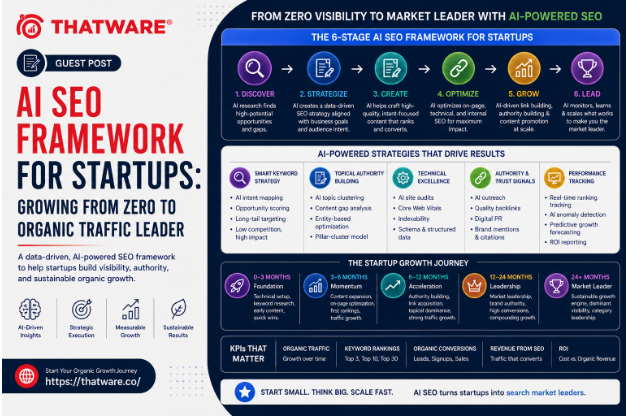
Starting organic SEO from scratch as a startup is a genuinely difficult problem. The domain has no authority. The content inventory is empty. The brand has no entity recognition. The competitive landscape you’re entering likely includes established players who have been building their SEO foundation for years or decades.
And yet, startups do break through. Some of the most impressive organic growth stories of the last five years have come from companies that were unknown eighteen months before they were ranking for category-defining terms. Understanding how this happens — what specifically makes the difference between startups that build genuine organic presence and those that give up after a year of disappointing results — is the real value of this article.
Why Startups Have a Non-Obvious Advantage
It sounds counterintuitive to suggest that starting from zero has any advantages. But there’s a real one: no legacy. Established sites have technical debt, content published before the current best practices existed, URL architectures that made sense five years ago but are suboptimal now, and internal organizational inertia that makes big strategic changes slow to implement.
A new domain gets to build the right way from the start. Clean URL architecture. Content built on semantic principles from day one. Technical implementation done correctly before there’s scale to complicate it. Entity signals established systematically rather than accumulated randomly over years.
AI SEO framework implementation for a new domain can take advantage of this blank-slate opportunity to build a more coherent and strategically optimized foundation than most established sites have.
The Startup SEO Sequencing Problem
Where most startup SEO efforts go wrong is sequencing. The temptation is to target the most valuable keywords first — the high-volume commercial terms that would produce the most traffic and leads. These terms are typically dominated by established sites with years of authority accumulation. A new domain targeting head terms in a competitive space is setting itself up for a frustrating first year of no meaningful results.
The right sequencing for startup SEO starts with the territory where the domain can actually compete and win. Topic areas where competition is lower, where the startup’s specific expertise creates genuine content differentiation, and where ranking is achievable within the domain’s current authority level. Winning here builds the authority base that eventually enables competitive positioning for more valuable terms.
AI-powered competitive analysis makes this sequencing decision more precise than intuitive judgment allows. It identifies specifically where the competitive gap is small enough for a new domain to bridge, which topics have high projected traffic value relative to their competitive difficulty, and what the realistic ranking trajectory looks like for each opportunity given the domain’s current authority profile.
Building the Foundation: First Six Months
For startups, the first six months of AI SEO should be heavily weighted toward foundation building. Technical architecture should be set up correctly from the start — a decision that’s cheap to make on a new site and expensive to fix on a large one. Content should be built around topical clusters that establish genuine authority in the startup’s specific area of expertise. Entity signals should be established explicitly: about page with clear authorship and expertise signals, LinkedIn presence, industry association citations, structured data implementation.
AI-powered SEO optimization for a new domain during this period focuses heavily on crawlability, semantic clarity, and content quality signals — the building blocks of topical authority that will compound over subsequent months.
The Inflection Point: Months 12-18
Startups that execute an AI-informed SEO strategy consistently — good content, systematic topical coverage, clean technical foundation, regular publishing cadence — typically experience a significant inflection point somewhere in the twelve to eighteen month range. The domain authority accumulation hits a threshold where competitive rankings that seemed unreachable in month six become achievable, and organic traffic growth begins to accelerate noticeably.
This is the moment that validates the entire investment. And it’s typically the moment where startups that had been questioning whether SEO was working for them suddenly have an unambiguous answer.
From Challenger to Leader
The startups that become organic traffic leaders in their category share a common pattern: they committed to building genuine topical authority rather than chasing quick keyword wins, they produced content that actually served their audience’s needs rather than gaming short-term ranking signals, and they operated with enough patience to let the compounding nature of organic authority work in their favor.
AI frameworks accelerate and optimize every part of this process — better strategy, better content direction, faster technical iteration, more precise prioritization. But they don’t change the fundamental dynamic: organic leadership is built through sustained, intelligent effort over twelve to twenty-four months. The startups that understand this, and invest accordingly, are the ones that arrive at an organic presence that their more established competitors find increasingly difficult to displace.
